
Preface: the following series, like the last, is adapted from a collection of emails I wrote during a global health elective I did as part of my medical residency. It deals with issues pertaining to healthcare delivery and equity through reflections on the care of children with neurological illnesses. My hope in sharing these posts is to bring awareness to these topics and cast light where readers may not otherwise have had the opportunity to see.
Mes chers amis et famille,
I write to you again from the western coast of Africa. Armed with three more years of residency training, I have returned to Guinea to spend a month caring for children with neurological illnesses. Boasting a population of 15 million, half of Guineans are children. Despite this fact, there are only ~20 pediatricians in the country, entrusting each to the care of 375,000 children (for comparison, there are about 77,000 pediatricians in the USA, or one for every ~950 children). There are no local pediatric neurologists.
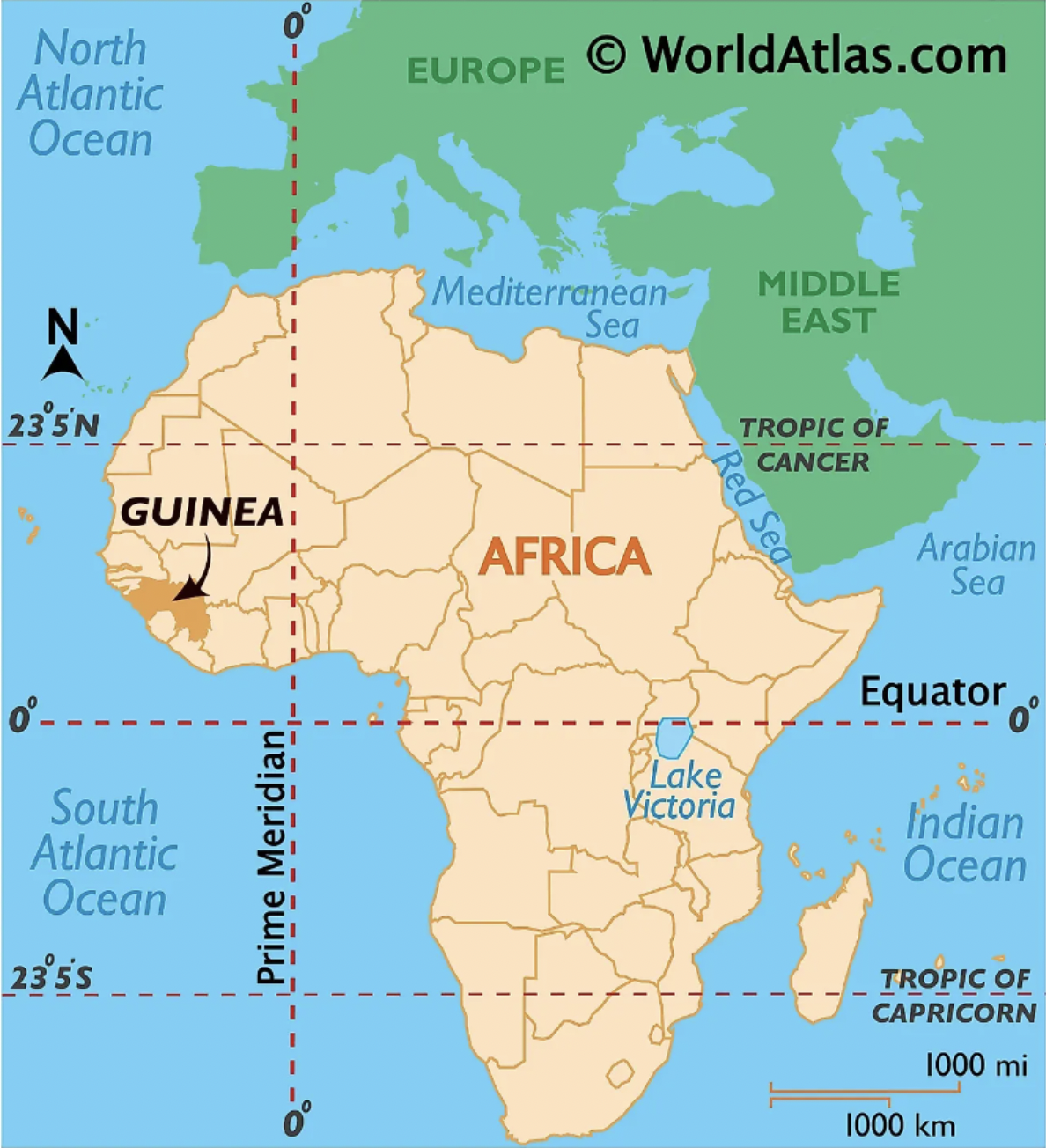
When I was last here, I spent a day visiting Sacré Coeur Hospital, a pediatric center that had been recently opened by an American foundation named Hope Ignited. At that time, the facilities were half built; in my absence, the work has continued, and the place now has full staffing, specialty clinics, and numerous healthcare professionals who visit from around the world to help develop the program. I will be staying on the hospital campus for the next month.
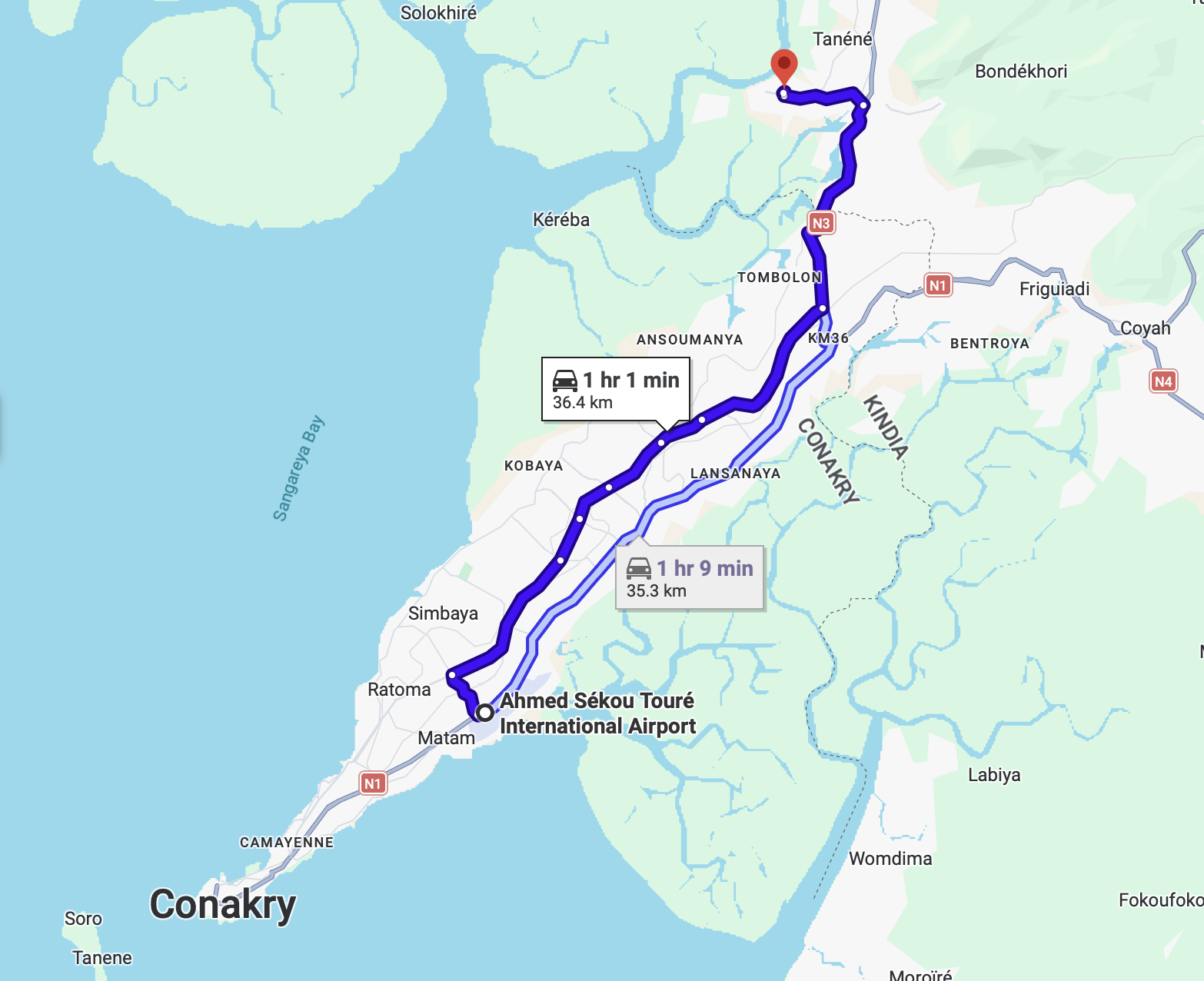
I arrive at the capital, Conakry, equipped with the best intentions and several copies of my paperwork. I land with (!) my luggage and am met by a driver. My accommodations lie in Dubreka, which Google claims is an hour’s journey north – its optimism ignorant of the state of the local infrastructure. Our journey lasts more than double that prediction. We make our way through the city, weaving between lanes of incoming traffic and onto the dusty shoulders abutting the pot-holed road where locals riding motorcycles or peddling wares scurry out of the way. The lack of alarm in their fleeing faces conveys the sense that this is not at all unusual. I try to relax and tell myself the driver knows what he’s doing.
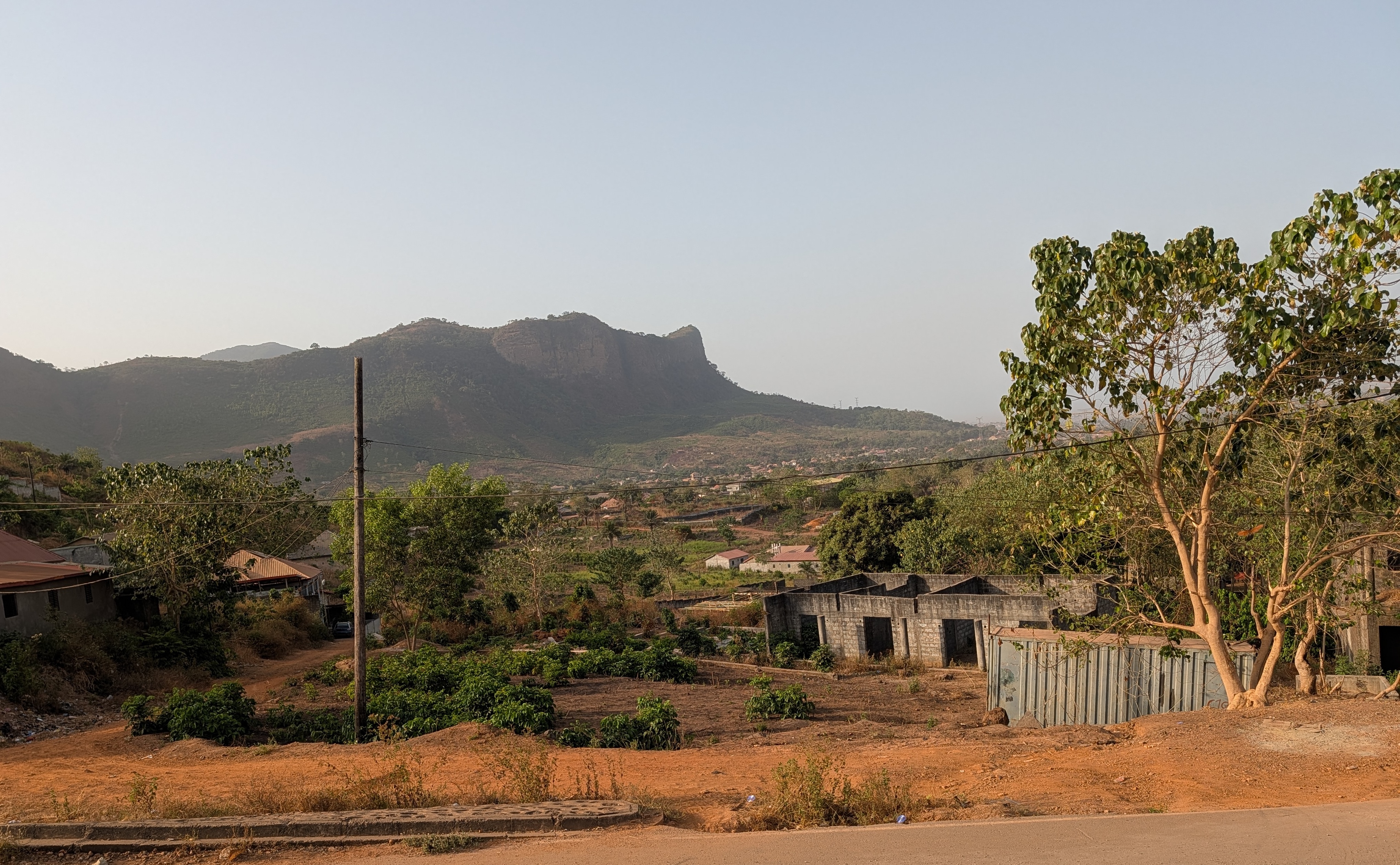
Somehow, without a major incident, we arrive after dark. The hospital campus is a gated compound with high walls surrounding several buildings including those where staff live, and in some cases, raise their children. I share an apartment with a couple of other volunteers. Compared to the chaos of Conakry, the vibe is slower, more relaxed here, softened by the flat-topped mountains in the distance and a natural beauty that was scarce in the city.
I am reminded of the often unpredictable nature of living in Guinea the next day when I wake to find the cell phone and internet networks both out. Forcefully unplugged for some undetermined span of time, I will adapt and seize the opportunity to throw myself into the work, and when the work is done, into books and writing at home. The days will pass simply and easily. I used to live like this; I don’t anymore. Something about getting caught up in the hustle of the week and my bad habit of winding down each evening with Netflix. How would I be spending my time if it weren’t for these comforts, these things? At home, environmental tendencies tether me to routines; away from it, each mile is a new horizon that seems to ask, “where are you heading?” It’s not that I lack the self-insight to ponder such questions, but without periods of vast, undefined time, the mind has no opportunity to expand and explore. One day into this trip and I am reminded, again, that I must unstructure more of my life.
At times, it feels that comfort is the enemy. If it is comfortable, it isn’t challenging; it’s probably something I’ve already done. Discomfort must become the aim, an opportunity for struggle and change, rather than just parading old skills and accolades that masquerade as growth. How many lessons of the road have been forgotten once the trip ends? How many best intentions have been lost in the humdrum haze of our daily routines? Three years ago, I knew when I left that I’d likely return, yet in the days of dragging my feet before buying my ticket over here, I felt the inertia in me growing as I procrastinated the purchase. I’ve become too habitual with my schedule, so automated that it generally isn’t a question of how I’ll spend any given free night so much as what streaming platform it’ll be on. In becoming this creature of habit, am I also handicapping myself?
So, why am I back here? I am driven by a sense of duty to employ the unique set of gifts I’ve (inherited or) cultivated to those who need them most. In the USA, where the provision of medical care for children with neurological illnesses can still be quite meaningful, I do not there possess in isolation those same gifts that here are in such short supply. For months after my last return from Guinea, I received messages from a grateful family whose son I cared for. Can the same act – the provision of care – hold different values in a context of scarcity as opposed to one of abundance? At home, I’m another pediatric neurologist; in Guinea, I’m the only one in the country. Through returning and reengaging, I will get back in better touch with my motivations for going into medicine, my former practice of writing, and emerge with a clearer sense of where I’m headed and what good I hope to do in this world. There will be bumps along the way. Sometimes, that’s just how the roads out here are.
A la prochain,
Le Gringo
//

