
Mes chers amis et famille,
I linger in the doorway as I close up the clinic room for the last time. Over the last three and half weeks, I’ve become settled, found a routine, grown comfortable – and now, my departure, without a definite return on the horizon. How much work remains to be done! Witnessing the struggles these patients, families and practitioners face on a daily basis, it is impossible to overstate the opportunity to contribute; the project is so immense, and my own contribution so small. I conclude my final visits with medication titration plans that will carry on for months – but what then? Anything that I have been able to accomplish in the past several weeks is a drop in the ocean of need that floods the decades.
I look around the room. The desk littered with prescription pads; the computer on which I’d compulsively save my notes for fear of losing them when the power went out, again; an air conditioning unit above the window that worked just well enough to prevent me from sweating through my scrubs; a sink without soap; that green box of oversized legos dually employed to assess visuospatial development and occupy the occasional rambunctious patient; the vaccine fridge humming in the corner. There was a mother who’d sat near there the other day, dressed in traditional Muslim clothing with her face covered, and turned away from the room so she could eat (“she was crying because she had been so hungry,” my interpreter had said); upon finishing, she turned around, uncovered her chest and nursed her infant openly. There are many parts of the culture here I still do not understand.
There’s a waste basket filled with notes I’d scribbled during past assessments and then crumbled into a pocket as the next patient arrived. I could tell you about each individual they belonged to. In those brief moments we shared, I hope that I was able to make each family, each child, feel that they were all that mattered to me. Those papers are the last physical remnant of my time here. Soon, the janitor will come and throw them away.
Opposite the desk, there’s the examination table where so many children sat. I think about the adolescent who’d leaned against it the other day, after returning with her family to follow-up on medications I’d adjusted. Her prior prescription hadn’t made much sense (a two-or-three times a day medication dosed but once). After I’d finished writing out our plan, they presented me with a new shirt, showering me with blessings and gratitude. I buttoned it up and we took a picture together. I’d thought the slight change to the prescription I made was far from special; we can scarcely know what our actions mean on the receiving end. The staff got a kick when I paraded my new prized possession in the hall and declared, “Je suis un vrai homme de Guineé maintenant!” I will cherish their generosity forever.
I clear out the cheap plastic chairs that my interpreter wiped down between encounters, from which each of those parents told me their child’s story. Just the other day, that mother returned with her 3-year-old boy I’d diagnosed with SMA and sat in one of them. His pneumonia treated, he was breathing easily, looking so much better than when I’d first met them – even as his prognosis remained unchanged. I hadn’t expected to see them again. I’d wondered if something had been lost in our prior game of telephone, but she’d just had trouble finding a lab for a test I’d recommended, she said. I got a name from one of the other doctors and wrote it down. As she’d come all this way, I repeated my examination and went through the plan again. Her adorable boy sat on her lap and chatted with her pleasantly, slightly in awe of me, but so trusting and cooperative as this strange white man put his hands on his failing body. He was so sweet and innocent; they seemed so attached. He would have become a handsome, strong man, someday- if he’d only been born elsewhere. She thanked me again before leaving the room.
There is a pervasive sadness hanging in the air, which buzzes with the sound of the vaccine fridge and the insects on the other side of the window screen. As much as I’ll enjoy returning to the creature comforts of home, there is much I will miss about being here, too: the sense of purpose and impact that has permeated this work, the community built around the hospital staff united in their mission, a simpler life devoid of the constant distractions imposed by cell phone access and reliable electricity. I know my reluctance to leave means my time here has been well spent. Three years ago, when I was last here, the obstacles that needed to be overcome before a dent in the need could be seen seemed even more immense; yet this departure, having witnessed such growth of Sacré Coeur in so small an interval, I leave knowing the project remains in the most caring, capable hands. I linger in the doorway for a moment longer, then turn off the lights for the last time, and walk away.
I scurry back to the guest house and rush belongings into luggage. Not for the first time, it occurs to me that I could have left half of them back in Boston. I share goodbyes with some of the other volunteers then load into a truck. In the back with the luggage, I watch as the hospital fades down the dusty road. As if sensing a departure, a small child waves at me through the rearview window. Maybe I’m just projecting, maybe it’s written on my face. We stop to merge onto a main road. It’s a straight shot into the city, minus a turn or two, and the impending traffic that will swallow us whole.
The sun sets in the west as we make our way south. Kids in school uniforms shuffle home alongside the traffic whizzing by. Men huddle around small television screens watching the game and making small talk. We honk to pass a whole family on a motorcycle, then again to pass an old car chugging along with bundles of tightly-wrapped tarp overflowing from the roof – I cannot decide which balancing act is more impressive, these bundles, or all the woman balancing baskets on their heads, dressed in magnificent colors, flowing along the sides of the road, unperturbed. Shopkeepers close up storefronts with names like “Diallo et Freres” filled with computer appliances, hats, and gardening tools…
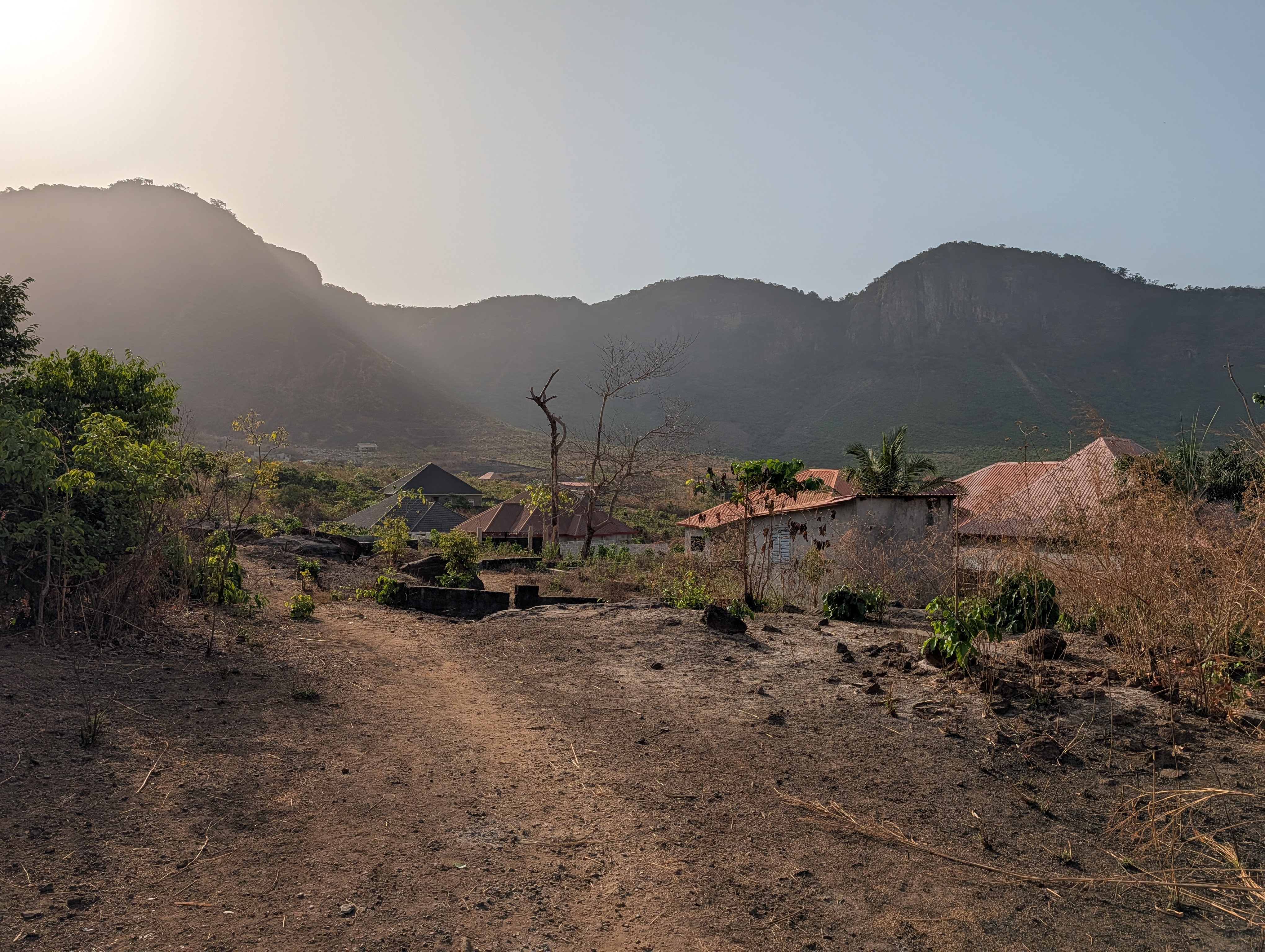
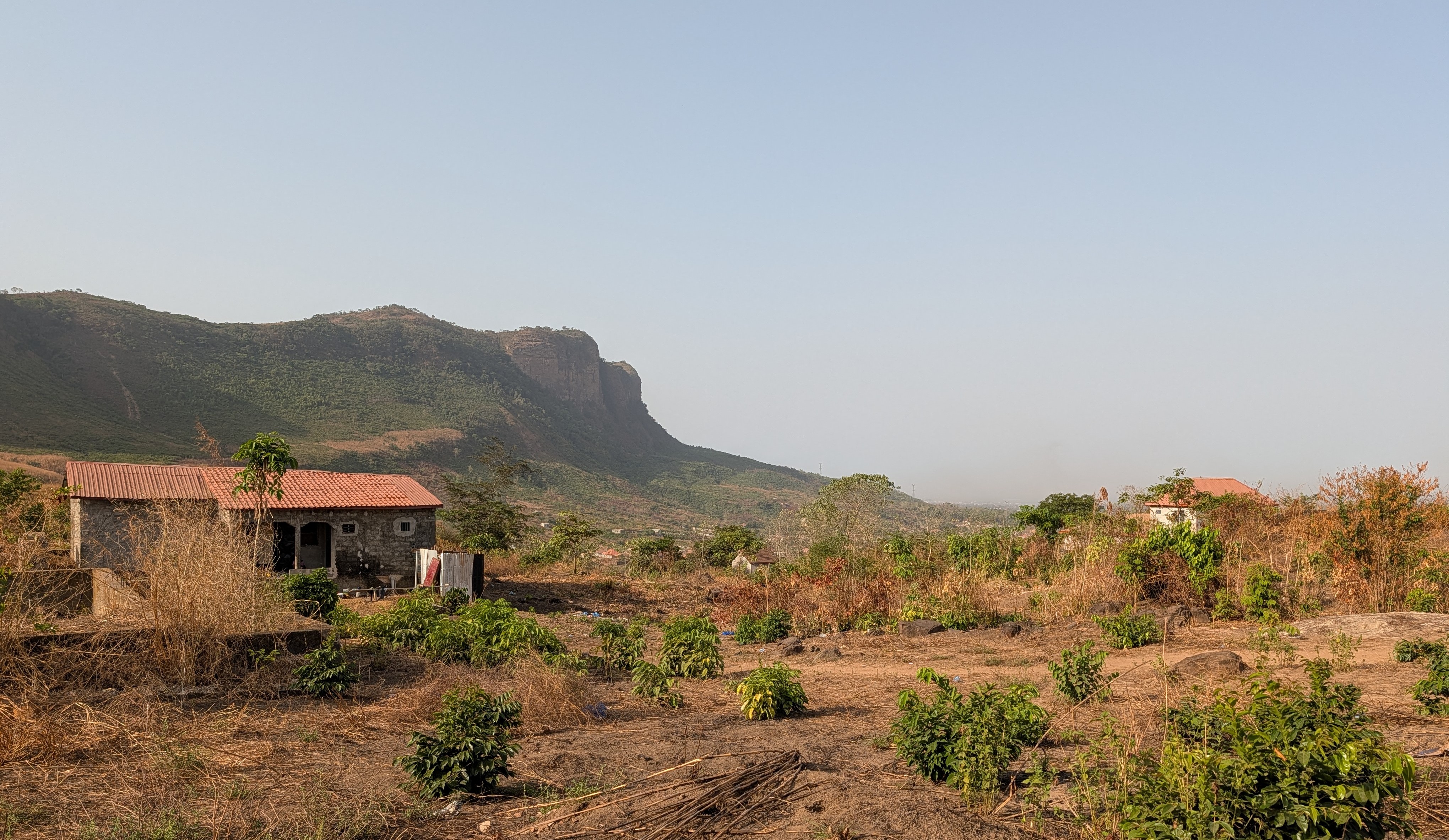
We pass a curbside game of soccer crammed into the road’s shoulder, and then the stores end to open into sprawling fields of tropical plants. There are little figures scattered among them, harvesting something that I hope will be sold here instead of shipped away. The air ripples with heat. It hasn’t rained in months – yet still the lush greens of tropical plants, secretly sipping the rain waters hidden beneath the soil, herald the bounty of the harvest to come. In the distance, the great mesas, flat-topped mountains thrust from the dry earth like giant tables of the heavens, wrap around the horizon and slope toward infinity, embracing this arid valley, these people…
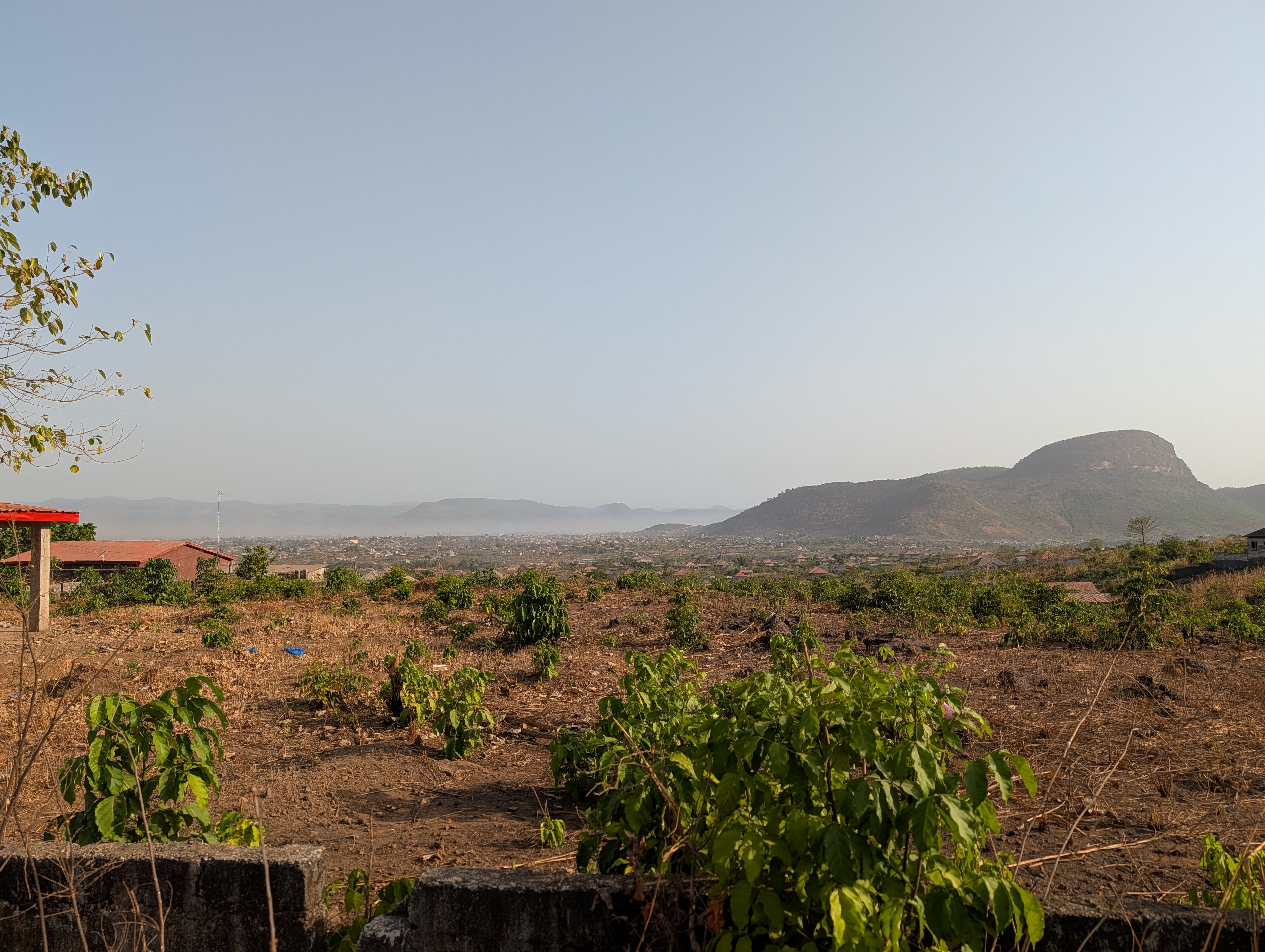
The tablelands dominate the vast expanses of empty space like monuments to those who’ve built their homes here. For the last month, I stared at those summits, dreaming of scaling them. I never found the right weekend. Life kept getting in the way (as it always does), but I know that they will always be there. I don’t know if I’ll see this place again, as much as I’d like to, am welcome here. If only life grants me such an opportunity…
The sun disappears behind the mountains, leaving a wake of fiery pinks, the last remnants of the day. I never realized how beautiful this side of the valley was before. As we press on, swarms of bikes appear from side streets, cars and trucks and vans seem to rise up from nowhere, slowly clogging the way. Back to Conakry for one last day, before I leave, for now.
A la prochain,
Le Gringo
///

